pRoducts
SERVICES
Menu

Post:
When is a Lift Required in a Residential Building?
Published:
June 5, 2026
High-rise housing became popular in the post-war era, and many of these buildings remain in use today. Installing lifts in communal areas was essential, as relying solely on stairs made it difficult to reach upper floors. Today, lifts continue to play an important role in meeting the demands of both public and private housing.
As the UK’s population continues to grow and available land becomes limited, high-rise living is becoming a more common choice. According to the latest UK census, 5.4 million households now reside in flats, maisonettes, or apartments, up from 4.9 million in 2011. With so many people living in multi-storey buildings, safe and convenient access is more important than ever.
A lift is required in a residential building when the building has four or more storeys, according to Approved Document M (Volume 1) of the UK Building Regulations.
Designed to move residents safely between floors.
Best for: Most residential buildings; mandatory in those with more than three storeys.
A compact solution ideal for low-rise buildings and wheelchair access.
Best for: Properties where a full passenger lift is not feasible.
Built to transport heavy or bulky items.
Best for: Larger residential blocks to reduce congestion in passenger lifts.
Allows emergency services to access upper floors safely during a fire.
Best for: Buildings over 18 metres above, or more than 10 metres below—the fire service access level.
Used to safely evacuate residents with limited mobility during emergencies.Best for: Buildings that need dedicated evacuation routes for wheelchair users or those unable to use stairs.
Selecting the appropriate lift type ensures compliance with building regulations such as Approved Document M (accessibility standards), Part M of the Building Regulations, and British Standards for fire safety, including BS EN 81-73 and BS EN 81-72.
Many factors influence whether a lift is required in a residential building.
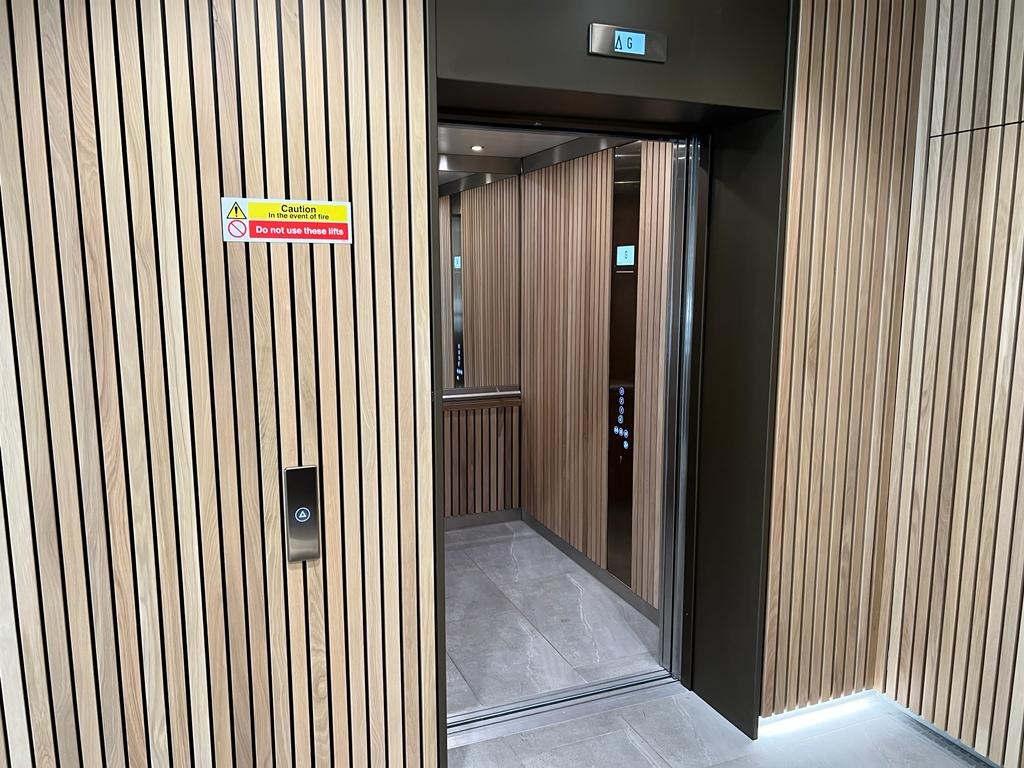
In the UK, the requirements for passenger lifts depend on the height of the building, the number of units, and accessibility standards.
Standard passenger lifts are EN 81-73 compliant, meaning they are connected to the building’s fire alarm system. In the event of a fire, these lifts automatically travel to the ground floor, the doors open and remain open, and no further lift calls are accepted. However, standard passenger lifts cannot be used to evacuate residents during an emergency.
Under British Standard BS 9999 (Code of Practice for Fire Safety), any residential building with floors more than 18 metres above or 10 metres below the fire service access level is required to install a firefighter lift. Defined by BS EN 81-72:2020, firefighter lifts are specially designed for use by fire services during emergencies, allowing safe transport of personnel and equipment to affected floors.
Evacuation lifts share many features with firefighter lifts, including uninterrupted secondary power, but are specifically intended to assist in evacuating residents who cannot use the stairs, such as wheelchair users or those with limited mobility. Firefighter and evacuation lifts are typically incorporated into a managed emergency plan to ensure the safe evacuation of all residents while maintaining compliance with fire safety regulations.
Meeting legal and accessibility requirements is a fundamental part of installing lifts in residential buildings. UK building regulations set out strict standards to ensure all residents can move around their homes safely and independently.
Under the Equality Act 2010, residential buildings must provide reasonable access for disabled people. This means that if a building has multiple floors, appropriate lift access is usually required to ensure that residents and visitors with mobility impairments are not placed at a disadvantage. Requirements include:
These features mean lifts can be used safely by people with a range of disabilities.
Approved Document M of the Building Regulations reinforces the need for accessible vertical transport in residential developments. For multi-storey residential buildings, the guidance states that:
Part M also highlights the importance of providing consistent, accessible routes from the building entrance to the lift and onwards to each floor.
Fire safety requirements also influence lift provision in residential buildings. Under BS 9999 and BS EN 81-72, certain buildings require specialist firefighting or evacuation lifts to protect residents during emergencies.
These lifts include resilience features such as emergency power supplies, water-resistant components, and direct integration with fire alarm systems.
BS 8300 provides best-practice guidance for creating inclusive and accessible environments. While not law, it directly informs building regulation compliance. It emphasises that:
Following BS 8300 helps make sure a building is not only compliant but accessible for everyday use.
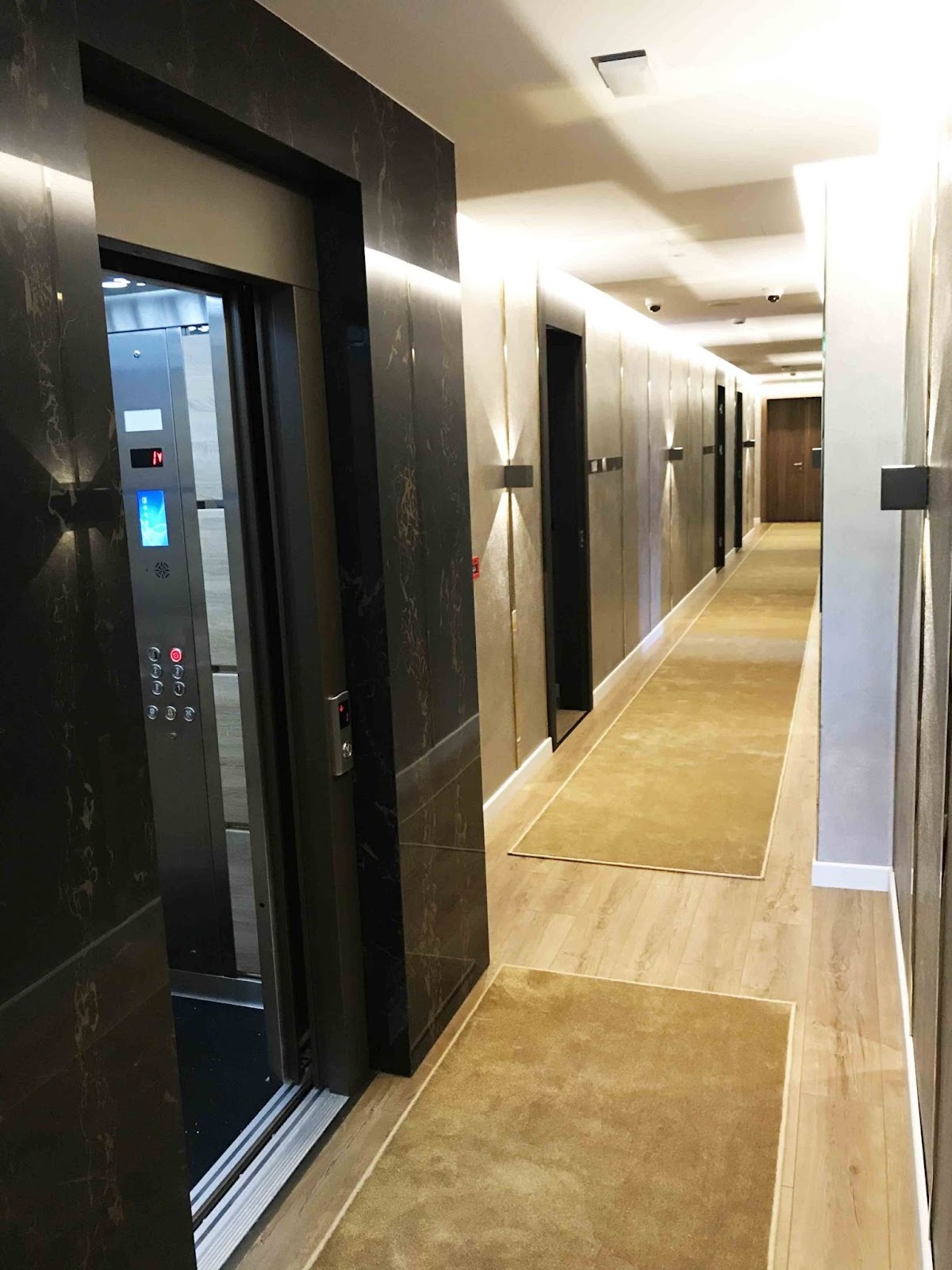
Lifts provide safe, convenient, and accessible transport for residents, visitors, and staff. In multi-storey apartments and tower blocks, lifts ensure that all floors are easily reachable, reducing reliance on stairs and supporting residents with mobility challenges, including wheelchair users and the elderly.
In larger developments, multiple lifts prevent congestion and ensure uninterrupted access even during maintenance or repairs.
Firefighter and evacuation lifts also provide safe access for emergency services and allow the evacuation of residents who cannot use stairs.
Lifts make residential buildings safe, accessible, and practical for everyone. If you’re looking for a quality solution in the UK, consider the Passenger Lifts offered by Acute Elevators.
Acute Elevators has been installing lifts across the UK for decades. Our solutions suit both indoor and outdoor environments, meeting the UK’s strictest safety and quality standards. If you want to discuss your project or get a quote, feel free to contact us.
Our expert team is well-versed in building regulations, accessibility needs, and lift maintenance, helping you deliver a solution that adds value and functionality to your building.

.jpg)

.webp)
.webp)